
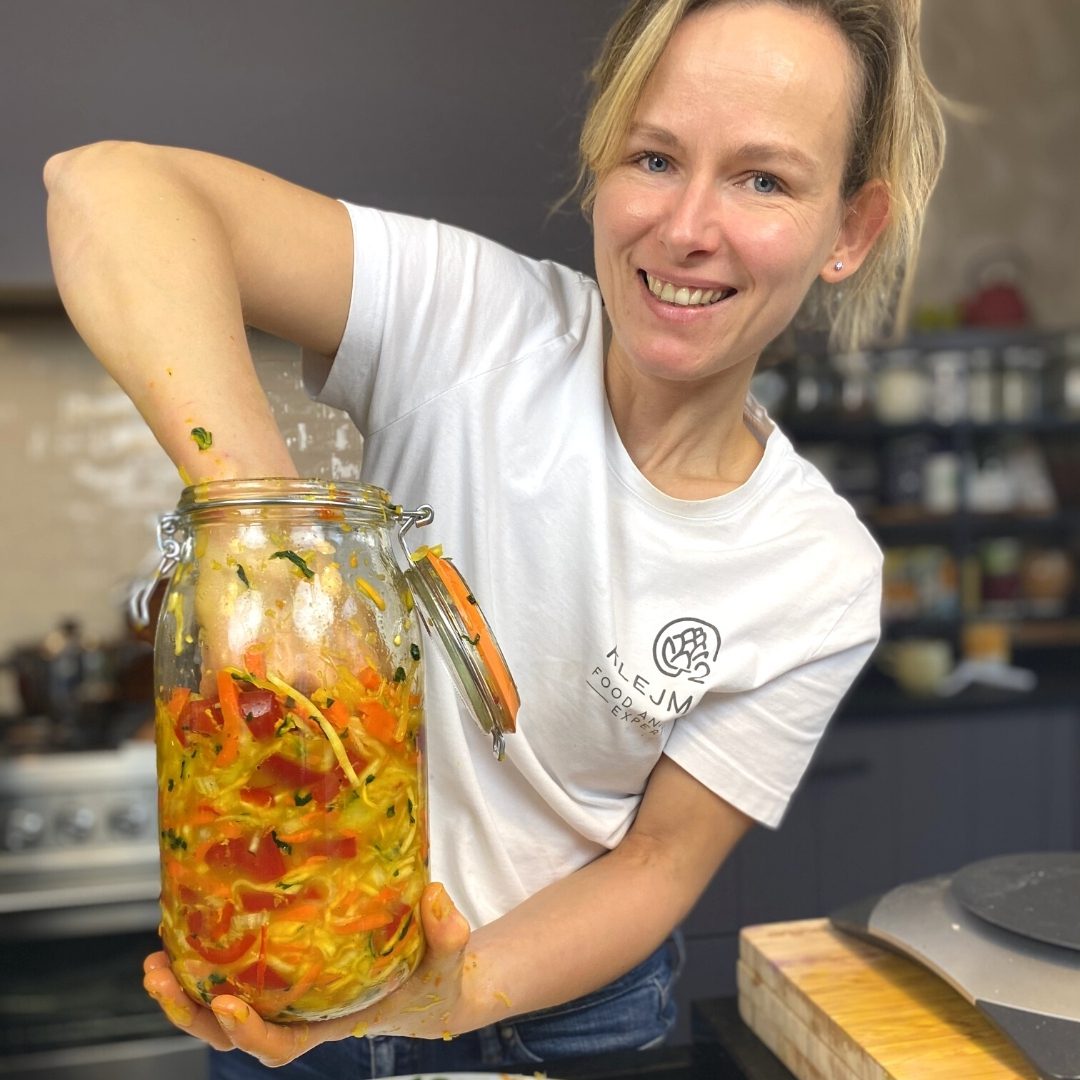
Kimchi is much more than a spicy Korean delicacy. For us, the Klejman sisters, this flavorful fermented vegetable reminds us of our Polish tradition of making sauerkraut. They are actually distant relatives, both packed with good bacteria that boost your health. Today we take you into the world of kimchi and show you why it deserves a place in your kitchen - and in your heart.
What makes kimchi special?
Kimchi is the Korean national pride. It is traditionally made with Chinese cabbage, radish, garlic, ginger and a generous helping of chili. The fermentation not only makes it delicious and spicy, but also rich in probiotics, which strengthen your gut microbiome. Like our Polish sauerkraut, kimchi is not only meant to last, but also to support your health.
Why is kimchi good for your gut?
During the fermentation process, lactic acid bacteria convert sugars into lactic acid. By the way, ‘lactic acid’ has nothing to do with milk or dairy products. It sounds technical, but it mainly means that kimchi is a natural source of probiotics. These are the good bacteria that keep your gut microbiome healthy and diverse. Healthy guts have a positive impact on your digestion, immune system and even your mood. In fact, research shows that regular consumption of fermented foods such as kimchi can reduce inflammation and boost your immunity. We always recommend adding at least 1 tablespoon a day of fermented vegetables to your diet.
Kimchi is not only nutritious, but also versatile. It is high in fiber and packed with antioxidants. Plus, it gives your meals a spicy and crunchy twist that your taste buds are sure to appreciate.
How do you use kimchi?
Kimchi is surprisingly easy to combine. It takes simple dishes to the next level and adds a spicy kick to almost anything. Give it a try:
- As a topping on a sourdough roll with avocado or hummus.
- In a salad for extra crunch and flavor.
- With an omelet or scrambled eggs for a spicy twist at breakfast.
- In ramen or soup, where it provides depth and complexity.
- Just from the jar, as a snack with a piece of cheese or on a cracker.

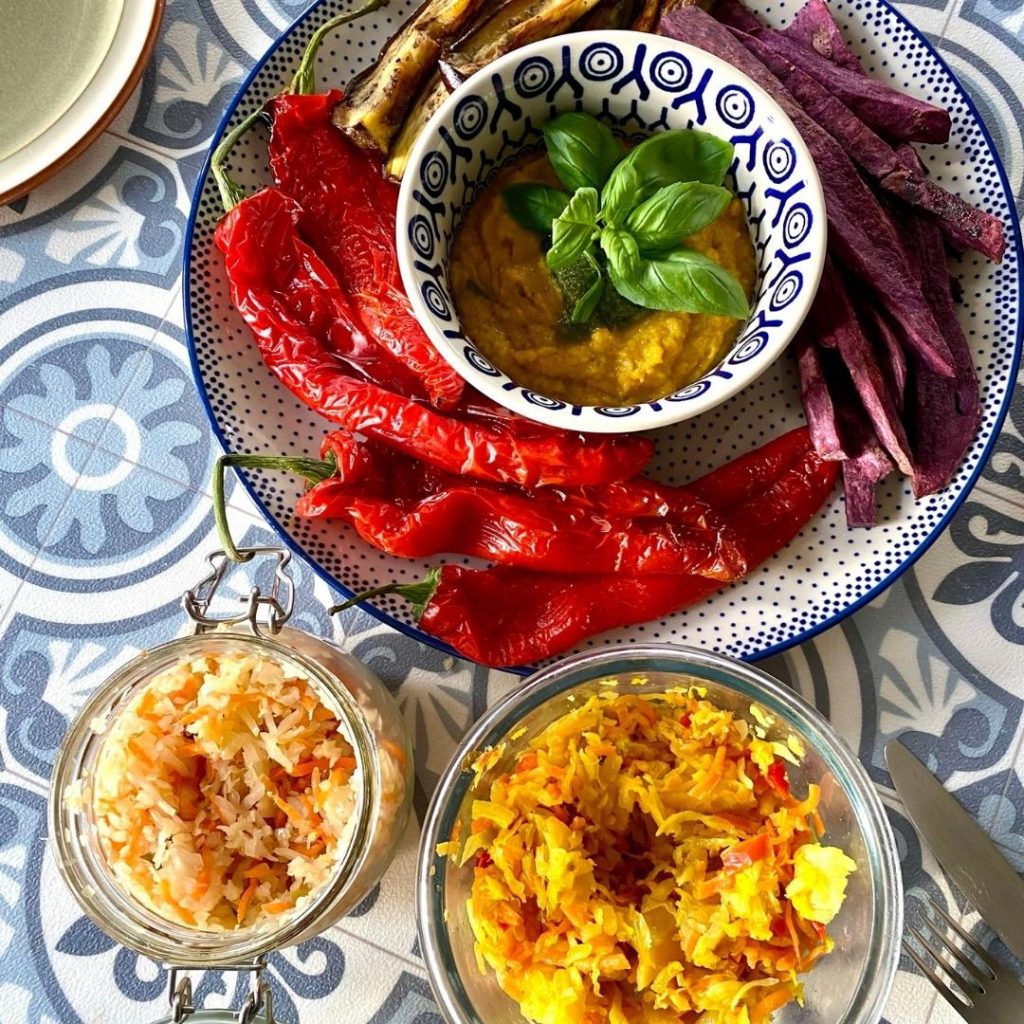

Making your own kimchi
Making Kimchi is easier than it looks, and it's a great way to get started with fermentation. Here is a simple recipe:
Ingredients
- 1 coarsely chopped pak choi
- 1 coarsely chopped Chinese cabbage
- 1 finely chopped fennel
- 1 grated apple
- 1 coarsely chopped red bell bell pepper
- 2 cloves of grated garlic
- 2 cm grated ginger
- 2 cm grated fresh turmeric or 1 teaspoon turmeric powder
- A pinch of cayenne pepper (to taste, depending on how spicy you want it)
- 15 grams of salt per kilogram of vegetables (1.5% of salt)
Preparation
- Sterilize the jars: Make sure your pickling jars are thoroughly clean by sterilizing them. You can do this by pouring them over with boiling water or dipping them into a pan of boiling water. Be careful, it's hot.
- Prepare the vegetables: Mix all the cut and grated vegetables and spices in a large mixing bowl. Add the salt and begin to massage and knead the vegetables. Keep going until the vegetables release moisture. When, as you press, you notice your hands are wet with moisture, the process is complete.
- Fill the jars: Fill the jars with the kneaded vegetables and press firmly so that they are completely under their own moisture. It is normal for some moisture to spill over.
- Close the jars: Make sure there are no leftover vegetables on the rim of the jar so that you can close the lid tightly. Place the jars at room temperature (18-23°C), preferably in a dish or on a cloth to catch excess moisture.
- Fermentation: Let the kimchi ferment for at least 7-10 days. Taste after this period; if the kimchi tastes fresh and sour, it is ready. For a deeper flavor, you can let it ferment longer. Then store the kimchi in the refrigerator, where it will keep for up to 6 weeks.
Kimchi as a powerhouse in the kitchen
Kimchi has more than earned its place in our kitchen. With our Polish roots, we feel a strong connection to fermentation as both tradition and health boost. Just as our grandparents made sauerkraut to get through the winter healthily, we now make kimchi - a Korean version that gives our meals a fresh, spicy twist.
Kimchi is more than a dish. It is a story of tradition, health and taste. Whether you choose a jar from the store or take on the challenge yourself, one thing is certain: your gut will thank you.
So what are you waiting for? Put your first pot of kimchi on the kitchen counter and let the magic of fermentation begin. Tasty AND healthy.